Day 180

Today is cold and sunny. Just like I prefer autumn to be.

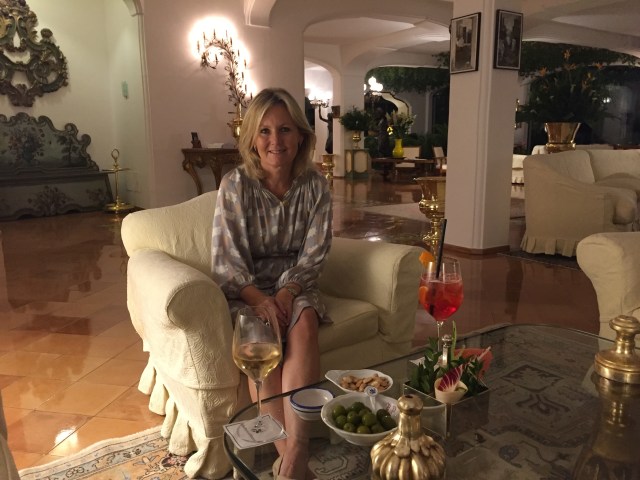
Last night we went back in time, to a bygone era, in central London.

The founder of the business media company that Geoff worked for, until three years ago,  asked us for dinner with his wife at their elegant home in Eaton Square; Geoff eventually took the CEO mantle from him, and he moved up to become Chairman. They have since both moved on to new pastures.

We turned up to their glossy, black front door, in one of the finest squares in Belgravia, London, at 7pm prompt. We didn’t want to keep the boss waiting. Once a boss, always the boss.

It is eighteen years since our last fateful dinner there. Back then, the founder and his wife had wanted to meet the other half, me, before offering Geoff the job as Finance Director. I poured gravy onto the plate, and it ran over the rim and down to the middle of the bowed, antique table. Not my finest hour. But Geoff, thankfully, still landed the job.

It was so strange to be sitting in their elegant drawing room again, after a prolonged period. The decor hadn’t changed. But we had changed.

So much has happened in the intervening years. Two house moves: from Clapham to Chelsea, and three years ago, we sold up and now divide our time between Fulham and Hampshire. The children have grown up. Anna has graduated from studying history at Cambridge. She left Queens Gate and moved to St Paul’s Girls School for sixth form. Hugo is now studying Chemistry at Warwick University, after leaving Harrow. We aren’t spring chickens anymore.

Life has been full of mountains and valleys. Good times and bad times. Some friends have died. Dad, Stan the Man, has died.

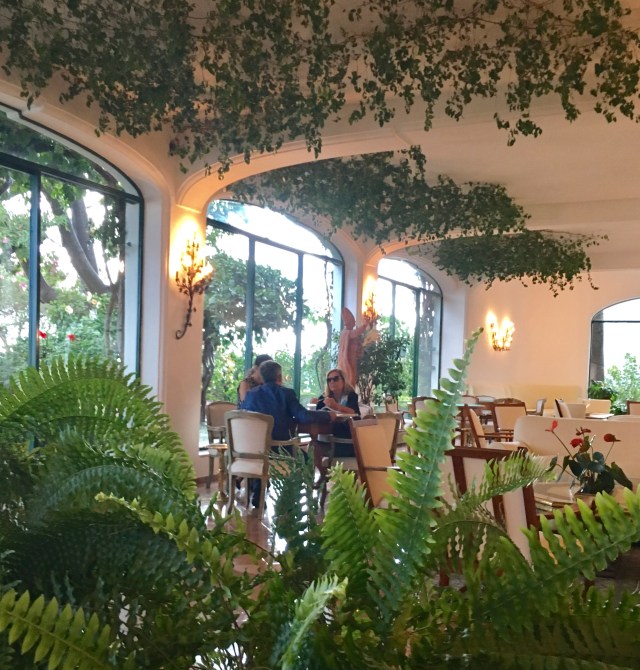
This time I didn’t have a chance to make a fool of myself at the dinner table. After champagne, we went to Motcombs on Motcomb Street in Belgravia. Our host dialled a black taxi on an old fashioned telephone with a handset. And he gave his details, the same way, I imagine, he has done everytime a taxi has been summoned.

The scene reminded me of Ray Milland ordering a cab in Dial M for Murder, when he left Grace Kelly at home to be murdered.

If I had walked out onto the street and found myself transported back fifty years to the past, I wouldn’t have been surprised. There is something timeless about the area between Sloane Square and Green Park, Piccadilly.

Of course, our hosts were regulars at Motcombs and were ushered to the best table. The waiter knew what wine they liked, what starter he always ordered, a whole avocado with tomatoes, and how the whole evening should proceed. The dinner had been replayed many times before, with different guests. ‘The boss’ dines most days at Whites, the gentlemen’s club. There is routine to their lives, like a well orchestrated ballet. Structure is paramount. And it is a refined life.

At 10pm were back in our car on our way back to Fulham. The spell had broken. It was again early November, 2016, and I had to walk the dog before bed and unload the dishwasher. But for a moment I felt like Grace Kelly on a movie set.
Day 179

Blood, sweat and tears. And leeches. And snakes. Bear Grylls would be proud of our jungle walk in Oz one Easter.

Not long after we moved to Chelsea, we went home to Oz in the Easter holidays – their autumn.

Dad had undergone open heart surgery in the interim. It was a tonic to see him fit, healthy and back to full strength.

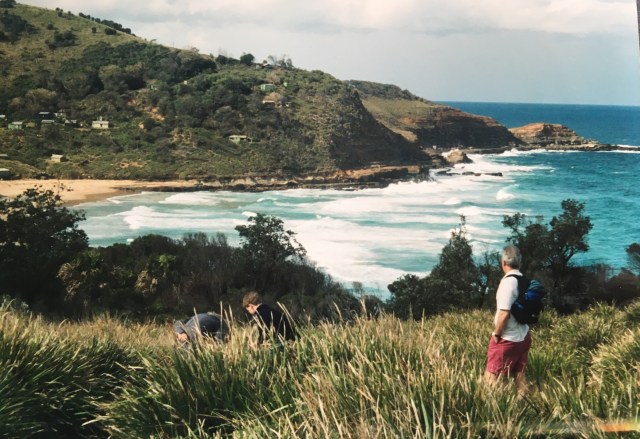
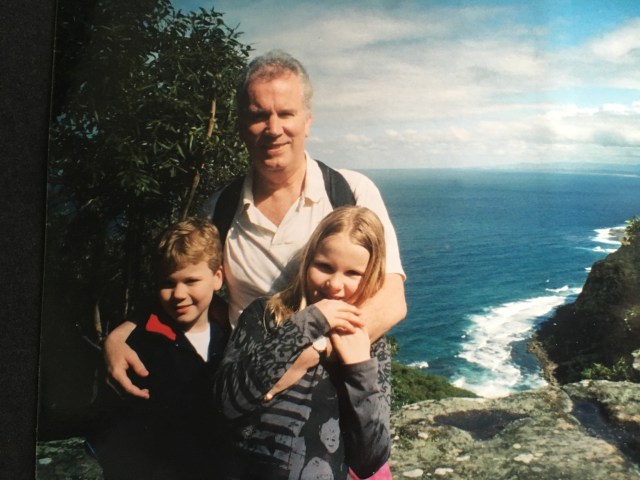
The weather in autumn in Australia, like in the South East of England, is variable. It was cool on this particular day, but sunny, not unlike today in London. I suggested we all go for a walk in the National Park, along the coast path, which I had been told had fantastic views, from Otford to Garie Beach.

We pulled up to find a sign: Coast Walk 12 kilometres to Garie Beach. That didn’t seem too far to us. Dad agreed to walk the first part, and then pick us up later at the end. The first four kilometres took no time at all: an hour. It was a nice flat path, with spectacular views of the Pacific. Dad turned back. We reckoned it would take another 2 to 3 hours to reach Garie Beach. The hour of the clock was 12 noon.

fullsizerender

Just before we headed into the jungle.

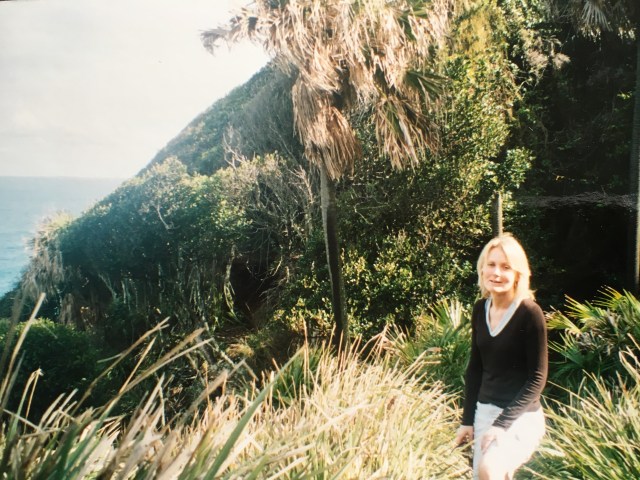
Dad left. We pressed on. Very soon we left the very neat and tidy path and headed into thick jungle rainforest; a complete change of vegetation due to the lack of sun. It was damp and dark and undulating. It was scary. And it was slippery.

We looked down at one point to find that our white socks were covered in leeches. Somehow I had the presence of mind to calmly remove them: whilst Anna was screaming hysterically. Then a diamond snake, harmless, but huge, slithered past. Then I shrieked. On we pressed. It took about two and a half hours to navigate up and down through the jungle rainforest. We had only covered a few kilometres. We were not even half way. Dad would be on his way to Garie Beach soon to collect us.

Finally, we emerged into shrubland. We saw a beach ahead. Great, we thought, that must be Garie Beach. Some walkers, with all the right kit, walked past us. To our dismay, they informed us that it was three beaches and two headlands to reach our destination. We only had a few small bottles of water, and the temperature was rising. On we pressed, passing squatters’ shacks that were illegally built, but ideal holiday homes for those who can cope without electricity and water. Better than camping.

fullsizerender

So tired. Leaving the jungle behind.

fullsizerender

Holiday shacks.

We were finally at the headland before the pickup point. It was now almost 5pm, and the rangers would soon be closing the park at dusk. I was freaking out that Dad would be having another heart attack. We had no mobile phone. Our water was almost gone.

fullsizerender

I told Geoff to press on ahead and reach Dad as quickly as possible. I forgot to ask for a bottle of water. So off he and Hugo went, at a pace. When I realised that Anna and I had no water, I tried to signal to him, when he turned around to check on us, that we needed water. I threw my head back and motioned glugging water. He misread my charade and thought I was telling him to go ahead even more quickly. I was so thirsty.

fullsizerender

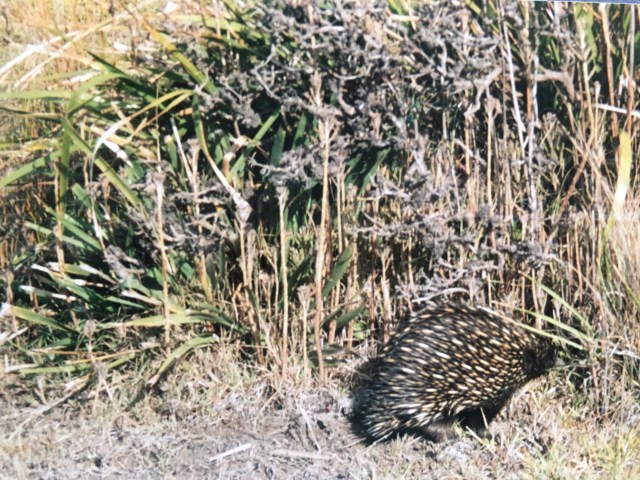
An echidna; like a porcupine.

Finally we made it to the carpark. The rangers had locked the gate to the carpark. There was a huge hill to climb. Hugo ran like a gazelle ahead and found Dad at the top of the road, just about to go and ring the police. The poor man. He was gripped with anxiety. We had walked for six hours with no food, no stopping and very little water. Crazy.

Bear Grylls would have summed up our adventure as ‘lunacy’.

Tonight, we are going to see Geoff’s old boss and his wife at their house in Eaton Square for drinks and then out for dinner.


Day 178

We are home, finally. In Hampshire, this morning, the sky is grey, and there is fog lacing the ground, like cotton wool.

We left an Indian Summer a week ago to visit the Amalfi coast, and we have returned to Autumn. The sky is raining red, rust leaves. The drive is carpeted with them.

When the children were growing up, the gloom of the winter months was mitigated by visits to Oz: we packed our cozzies and headed to the airport at Christmas or Easter for family, sun and surf. It is the history of our family.

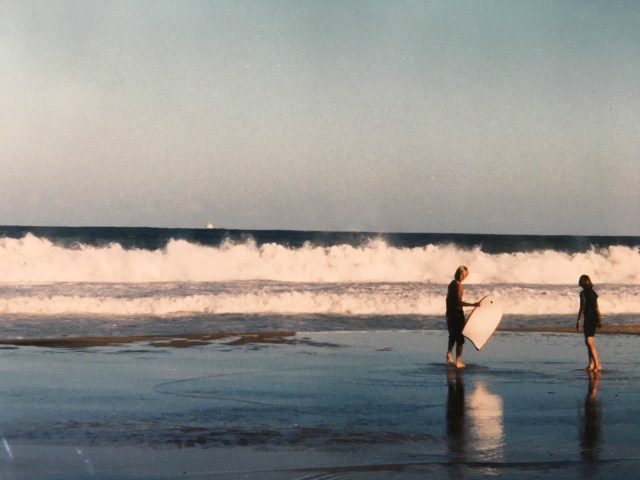
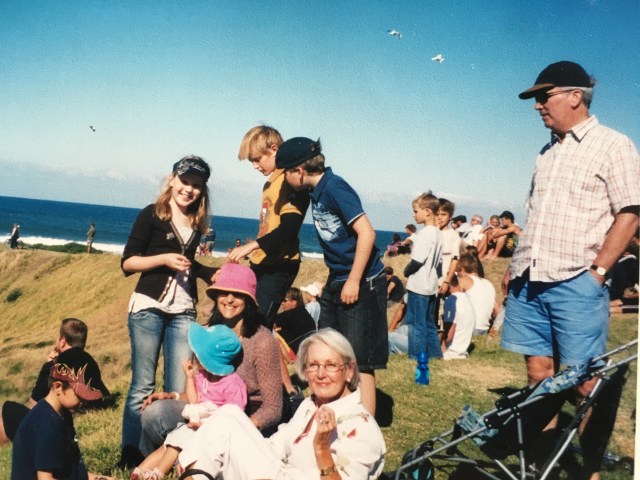
Sometimes, though, we were unable to swim because of king tides – where storms at sea made the waves massive and dangerous. In the Easter of 2007, king tides hit the Illawarra coastline. The waves washed across the beach and into the carpark. Youngsters skidded, upright, across the sodden sand with body boards – it was as if they were riding on escalators across the expanse.

fullsizerender

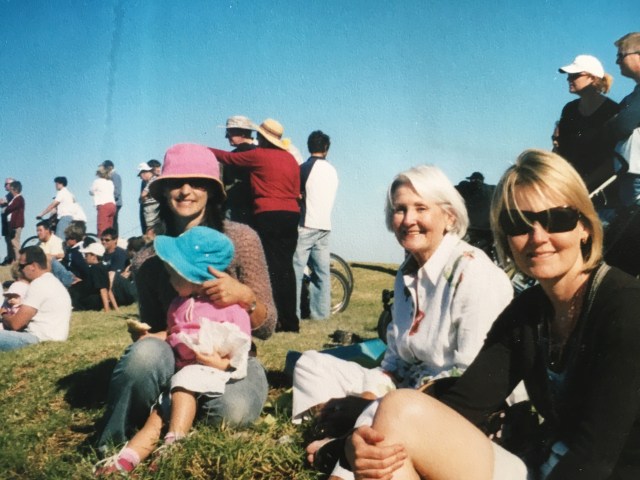
But down at Sandon Point, where the escarpment turns inland and the plains open up, experienced surfers were riding enormous waves – 15 to 20 feet. We heard through the grapevine, and headed down to watch the spectacle on a Sunday afternoon. The riders were being loaded onto the waves with jet skis to avoid the crushing white wash.

fullsizerender

fullsizerender

Being entertained by the big surf and surfers.

There was a coming of age film in 1978, when I was 16, called Big Wednesday. Great surfing mates grow apart, as they age and take different paths, but they reunite for the ride of their lives, one last time, for the perfect swell. The film was written by surfers as a tribute to their years growing up in Malibu.

Shaun, my brother, was a keen surfer, and a lot of my male friends surfed. My sister in law, Wendy, was a surfer, at a time when not that many women surfed. She carved the waves with the best of the boys. And she had their respect. I am afraid it was like that – sexism on the waves.
I was not really the Baywatch type. Too fair! I burnt, went brown and then peeled. I was not a surf chick. But I loved the sea, and I appreciated the skill involved in riding a wave without falling off and being pulverised.

I love the fact that my children love the Aussie surf. And feel at home swimming and body boarding in the great Aussie waves.


Day 177

There has been another massive earthquake in Italy. My high school friend, Karen Noswothy, let me know, as we were in transit when it happened. Devastasting.

It is too horrible. When we were safe, others were not.

Thankfully, there were no fatalities, but 15,000 people are displaced in an area north of Rome. Their lives have been upended.

Geoff was in Mexico City in the big earthquake in the early hours of 19th September, 1985, a few years before I met him.

He noticed that his hotel room was shaking, but thought nothing of it and went back to sleep.

He caught the first flight leaving from the airport that morning to Los Angeles. He noticed that it was chaotic at the airport, but thought that it was normally chaotic. It was only when he reached Los Angeles, that he discovered the extent of the devastation and that about 5,000 people were dead.

Growing up in a white, middle-class suburb of Sydney, tragic natural events, like these, felt remote: a long way from sunny Down Under.

Although the bushfires and earthquakes in Australia felt real.

War did not.

The Vietnam war, documented on television, was a big game changer. You knew Aussies were fighting, that it was horrific, that innocents were dying, and that it was an endless, unwinnable war. But it still felt a long way off to me, a teenager, who had never travelled off the island.

I worked in the City during two major IRA attacks. The Bishopsgate Bomb, detonated at 9am on Saturday 24th April, 1993, caused one billion pounds worth of damage. Every window of the building opposite Lloyd’s was blown out, and the streets were covered in work papers like confetti. It was a shock to see what a bomb can do. I had never heard of, let alone seen, bomb damage in Australia. I used to frequently visit a client in that building. I was trying for a baby.

We are back in England soon from Italy. Where there are no earthquakes or hurricanes to speak of.

img_0885

The volcano on the island of Ischia is not active.

Mount Vesuvius, which we gazed at from Naples and Ischia, is still active, and it will erupt again. It is hard to believe that, when you are eating pizza and watching Vespas darting everywhere.


Day 176

It is windy, but sunny today, in Ischia, Italy.

Yesterday, we went to Prochida, a small island about 20 minutes by ferry from the main port in Ischia. I went there three years ago, and I wanted to show Geoff.

Three years ago, Geoff and I were meant to have a holiday in Ischia, to mark the 25th anniversary of our engagement. Again, disaster struck. He was unable to make it last minute. He had to bale out due to work reasaons. It wasn’t that he was under pressure at work. It was crucial for him to stay; our future depended on it.

What should I do? Go or stay? The children were both elsewhere at Uni and school, so I decided to brave it and go it alone. I couldn’t pass up ten days of swimming in the sea.

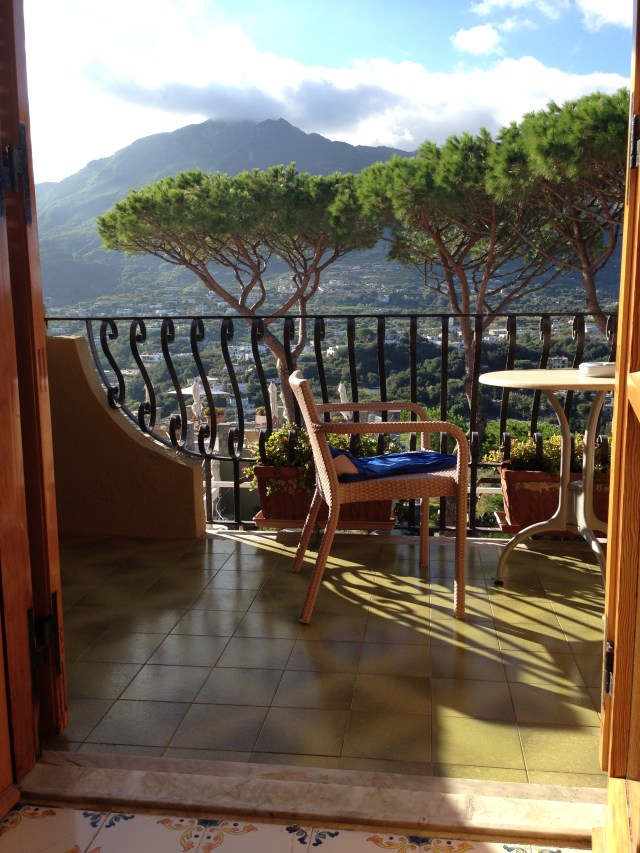
The hotel was at the other end of Ischia from where we presently are, in Lacco Ameno, on a hill top, with giraffe like pine trees. It was full of couples. The receptionist asked at check-in, “Will Signor Wilmot be joining you?” I replied that he couldn’t make it due to work commitments. One of his eyebrows shot up. He was thinking, “He’s left her!”

The hotel had excellent wifi, so I downloaded book after book after book. I read by the pool and at the local beach. I swam in the emerald water and used the thermal pools, Ischia’s speciality, at the hotel.

And every other day, I took myself off on an excursion: to a classical concert at famous gardens, La Mortella, in Forio; to Prochida to see an authentic, non-touristy community; to thermal springs and to the Castle Aragon, which is a stone’s throw from our current location.

The days were doable, albeit lonely, but I have always liked my own company. Well, most of the time. I was sick of myself after ten days if the truth be told.

It were the evenings that were torture. One of the main attractions in Italy is the food. It takes centre stage. If you are on a diet, forget coming to Italy. You will crack under the pressure of the pasta, pastries, seafood, salami, tomatoes on toasted bruschetta. You may have resolved, before travelling, to only occasioanlly partake in the carbs. Forget it; you will crack on the first day and eat all that is on offer. I am dreading to think what the scales will say when I arrive home!

Each evening, I would head to my table. My table was in the middle of the room, and I was surrounded by couples who faced into the room; yes, directly towards me. I took a book with me each evening, which I read without glancing up from my lap, even when shoving spaghetti into my mouth.

It was bearable until the Saturday night. It was the ‘romantic night’. I was greeted with a red rose from a waiter at the door. I exclaimed “No, grazie” and showed him the face of my hand in rejection. He looked hurt. What could he expect?

Then the serenading began during the meal. A quartet went from table to table strumming and singing love songs. Surely they wouldn’t come to me, alone. Yes they did. Of course they did. I couldn’t keep reading whilst they were beside me, bellowing out “That’s Amore.” I went puce with embarrassment.

So  yesterday, Geoff and I set off for Prochida, and we walked the same trail I took three years ago, exactly.

img_0919

Another scene from the Talented Mr Ripley, filmed here in 1999, in Prochida.

Along the way, we saw pretty villas, locals buying veg and fruit from tiny fiat lorries and small cars, as the roads are so narrow.

Today, we are going to catch the local bus around the island.

The reason we didn’t stay at my hotel in Lacco Ameno, is that is is closed for the season for renovations. What a shame. I would have liked to turn up with Signor Wilmot.


Day 175

DISASTER struck yesterday. We have been conned by the photos, on the internet, of our hotel in Ischia, an island off the Amalfi coast. It is a dump, bearing no resemblance to the photos I poured over.

I chose the hotel, as the small beach in front of it, with views towards Aragon Castle, was featured in The Talented Mr Ripley, filmed here in 1999. A young Jude Law, in his prime, lounges, with a young Gwyneth Paltrow, on the volcanic beach out front, when a young Matt Damon chances upon them. It is an idyllic piece of cinematogaphy, showcasing a glamorous, bygone era of foreign travel, when only the rich could afford it.

We arrived in the driving rain to see rubbish being washed up on the windswept beach. No movie stars in sight. Just a deserted, dirty beach. There was a section of missing tiles on the hotel pier. And the icing on the cake was that the next door area was a construction site.

img_0384

The beach scene for the Talented Mr Ripley:  but no movie stars in sight.

I had an argument with reception at checkin. We had indeed paid for half board – breakfast and dinner. “No signora. You are mistaken.” I was not mistaken. I had the paperwork to prove it. And the room. I hate bright yellow. The room was bright yellow, and the bathroom had white and canary yellow tiles. It was past its useby date; there were cracked tiles and missing grout.

Geoff seeing the scowl and disappointment on my face quoted Rudyard Kipling’s poem If: “If you can meet with Triumph and Disaster; And treat those two impostors the same.” 

So Positano was a triumph; Ischia was a disaster. I think he was making the point that you must remain steadfast, in character, irrespective of external highs and lows. In other words, he was hoping I would take the high road and not throw my toys out of the pram.

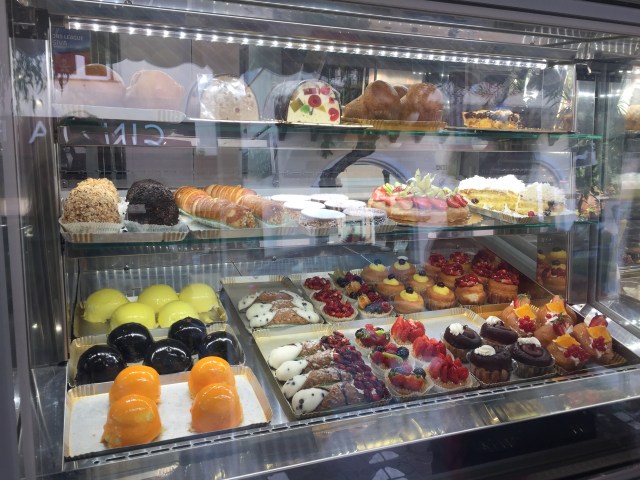
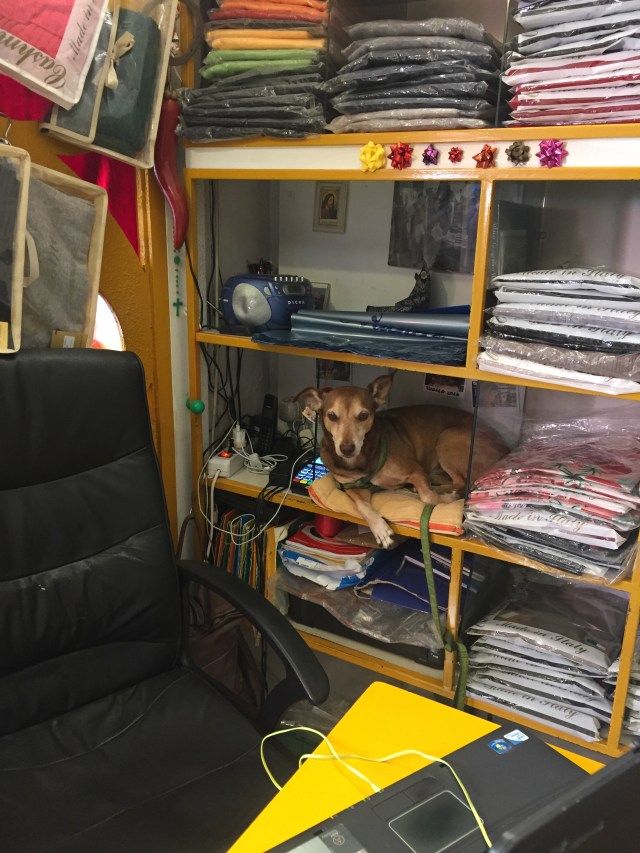
We went in search of some expresso and cake; the only sensible thing to do in the circumstances. The quality of the cakes in Italy is exceptional, wherever you are! And we even found a shelf holding a beloved dog in a boutique on the way; the owner explained that he liked to be near her. I missed Domino!

img_0382

Typical pastries and puddings.

img_0381

Is the dog for sale?

All was not completely lost back at the hotel that night. We were the only guests enjoying half board in the restaurant. But the food was out of this world; one of the best meals we’ve ever eaten: seafood risotto, steaks and light-as-air puddings/dessert. I felt sorry for the staff that we were the only ones to enjoy the chef’s mastery.

It is the last week of the season, and the maitre d’ will soon be leaving his young family to work in Davos, in Switzerland, until the tourist season commences again in Ischia, in March 2017. He will, he explained, miss Christmas at home with his bambinos. He bemoaned the fact the tourism couldn’t be sustained over the winter months in Ischia: that the island could not make the most of the natural thermal springs and sunshine.

I took look one look at the hotel falling apart around me; surely this was the problem. The hotels were not up to to scratch. Noone was putting money back into the infrastructure.

Today, we will go to Procida, a small, non touristy island about half an hour away by ferry.


Day 174

We woke this morning to a dramatic thunderstorm off the Amalfi coast. And sat eating breakfast, our last in Positano, watching lightning strike over the ocean. It was a natural fireworks display.

Today, we travel to Ischia. And there is a story to be told about Ischia. I have been, but not with Geoff, three years ago. I went on a romantic break on my own – at the last minute Geoff had to bale out due to work!

The one downside to a stay in Positano, as far as Geoff is concerned, is that you cannot walk along the coast. There are no footpaths on the road: only just enough room for two cars to squeeze by each other like shy strangers.

Yesterday, we caught the ferry to Amalfi, about 14 kilometres south of Positano, so that we could see the coastline from the water. Positano is very quaint, but there is no real old town, only an ancient church. The buildings look like they have been constructed in the 60s and 70s, not architecture’s best hour.

img_5448

The narrow walkway down to Positano town.

Amalfi has a square, lined with exquisite shops, full of local delicacies. There is a small, attractive old town. We sat and people watched in Pansa (1830) over a cup of coffee and pastries, and bought authentic goodies for the children’s Christmas stockings.

Now that we are on the cusp of the Christmas period, festive lights and trees will soon line the main routes in London. And the shops will fill up with frenzied shoppers. With the warm weather clinging on here in Italy, it is impossible to contemplate cold weather, perhaps even snow, in Britain soon.

In the Lemon Store, we bought Limoncello, made out of the local lemons from the ancient trees of “sfusato Amalfitano” to take back to London and Hampshire. Each night, we finish the night with the liqueur, made from fresh lemons from the hotel garden. It is an effective digestif after a plate of spaghetti.

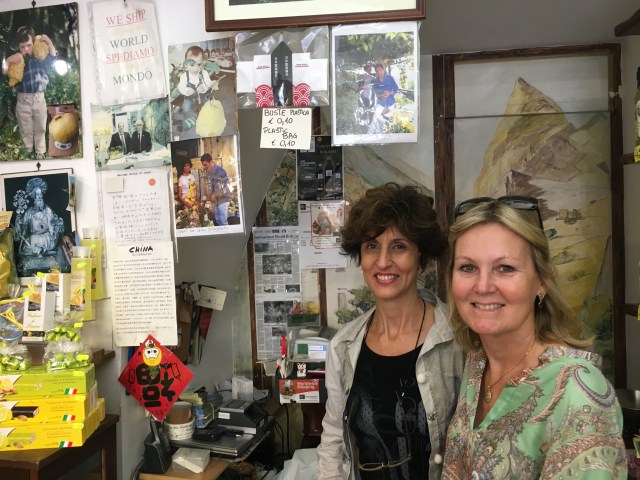
On television at home, we often watch an Italian chef, Gino D’Acampo, on his travels around Italy. The owner of the Lemon Store pointed to a photo of Gino with her, hanging near the cash register. Apparently, her lemon farm featured in one of his programmes, three years ago.

img_5459

At the Lemon Shop in Amalfi.

I had been hoping for one last swim in the sea before we caught our ferry from Naples to Ischia, but there is too much electricity about. I don’t want to end up like a fried sardine. When the sea is lit by the sun here, it is like sapphire, but when it is overcast, it has more grey to it, making it a black/blue, like majorcan pearls or  black opals.

Instead, I had a stroll through the the tasteful, authentic interiors of the common areas; I found the owner of the hotel [her beloved husband is dead] discussing the menus with her staff. Attention to detail is obviously her catchphrase.

fullsizerender

The owner discussing the hotel with her staff.

Arrivederci Positano; grazie for a bella time.


Day 173

We are still on the Amalfi coast today. It is hazy, but the sun is trying to peek through.

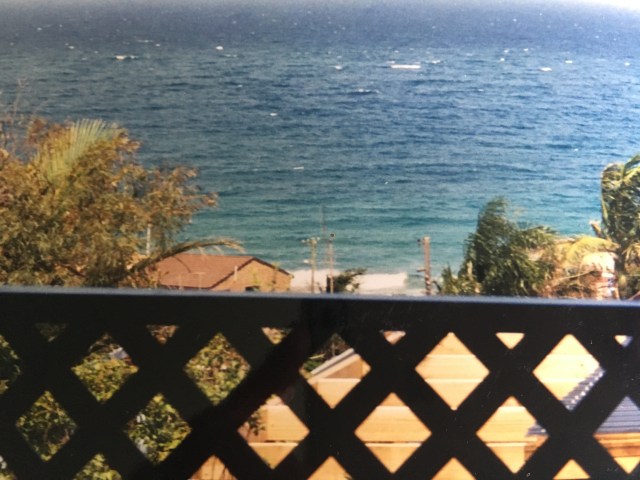
The view from a terrace, at breakfast, this morning in Positano reminded us of the view from the balcony at 19 Cater Street, Coledale, in Australia, where we visited my parents many times. Unlike here on the Amalfi, there is a thin strip of plain – flat land – between the escarpment and the sea, making human settlement easier. Here in Positano, I have no idea how they manage to build the houses clinging onto to the cliff face, like magnets.

The Cater Street house was on a steep hill, that my father, Stan the Man, coined ‘Heartbreak Hill’. It had far reaching views east to the horizon. Geoff loved sitting on the balcony and reading in the peace and quiet. When he could! If Stan, my father, found him on his wanderings around the garden – he was always pottering – he’d interupt his solitude with endless kookaburra chatter. Dad loved a chin wag.

img_4690

The view from the Potts house in Cater Street

Yesterday, the sea was particularly rough in Positano, making it impossible to enter the water from the swimming terrace, constructed with concrete over rocks – there is a lift that takes you down 300 metres through rock to reach it. It was too rough to attach the swimming ladder to the edge of the terrace. You had to enter the water from the beach.


img_0368

The sea is calm at our hotel in Positano today; yesterday it was trecherous.

This took some expertise. Gill Davis, my friend and dancing partner in Australia, told me that waves usually come in sets of seven, followed by a lull. (Her husband is an ace surfer, having started as a grommet in Cronulla in his early teens. He is now almost sixty and can still surf the big swell with the best of them.) I instinctively knew how to read the waves, growing up and swimming in Aussie surf.

Most of the Germans, Americans and Italians at the hotel, were obviously ignorant of this phenomenon; I watched, with mouth open in horror, as they were repeatedly knocked to their knees entering or exiting the dumpy foreshore. One poor woman was knocked over in flippers, and couldn’t get up. I hate to say it, but it was her great weight that kept her horizontal for many minutes, before she could roll over and somehow get to her feet.

I went for a swim several times, and being Miss Bossyboots, tried to explain to whoever was on the beach that they had to wait for the lull. They seemed grateful when they made it through to the washing-machine like sea further out without injury.

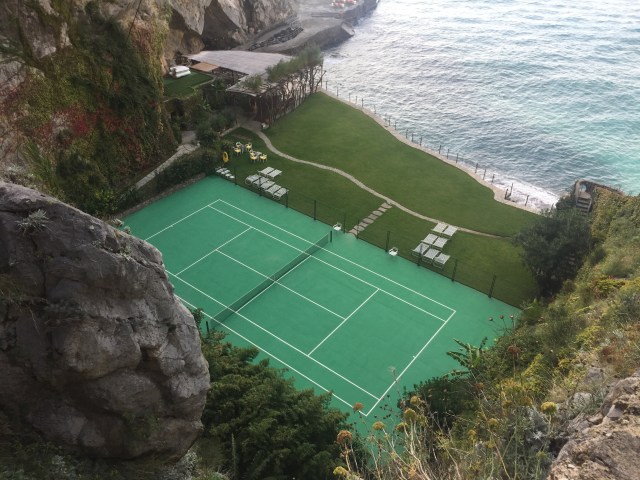
Later, Geoff and I had another game of tennis on the glorious court, and then we headed to Chez Black on the beach front at Positano harbour for some more carbs at dinner time.

Today, we are catching a ferry to Amalfi, the town.


Day 172

It is sunny again today, and the sea is glimmering once again in the sun, this morning, on the Amalfi coast, Italy. This kangaroo is bouncing with la dolce vita – the sweet life.

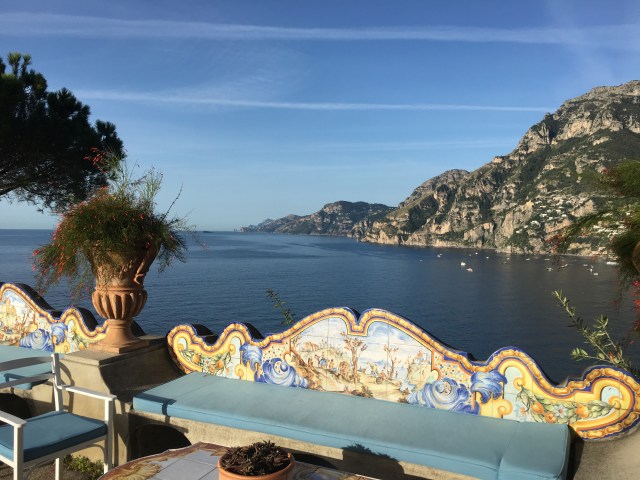
Yesterday, we made the most of the exquisite beauty of Positano, and the vantage point of our hotel: perched high on a rocky outcrop, with uninterrupted views north towards Positano, with its black volcanic beach and brightly painted terraced houses tumbling down the cliff, and to another smaller town to the south, Praiana.

It is a jewel of an area. Years ago when I was working for Clyde & Co, a law firm in the city, a well travelled American told me that of all the places he had visited, he thought that the Amalfi Coast was the most beautiful. He had not been to Australia!

Almost twenty five years ago, Geoff and I travelled to Rome to celebrate my thirtieth birthday. We met up with Greg and Mary Beth Hopp, who had just stayed at our current hotel. Greg was an attorney for a Chicago law firm we were partnering in a big piece of litigation for Lloyd’s, the insurance market.

Later a postcard of a Majorcan tiled bench at the hotel, with panoramic views of Positano, arrived on our doormat in London. We resolved to one day come here. It has taken twenty five years, but better late than never. And it was worth the wait.

img_5415

The view in the postcard that the Hopps sent us in 1992

After making our way out of the industrial area that blights the Napoli Bay, then passing the Sorrento coastline, we were finally winding our way along the hairpin bends of the Amalfi coast. There is no room to breath on these roads. On one side is sure death beyond the barrier, and on the other side, the cars shave you as they go past. Most of the cars have dents in them from bumping each other.

So many times in life, the reality of a holiday destination, after endless dreaming (and now looking on Tripadvisor), has failed to live up to expectations. How many times has the hotel depicted in brochures, and now on the internet, edited out: the busy road, the fag ends in the sand, the scuff marks on hotel walls, the close proximity of other hotels, the construction site behind the hotel, the smallness of the pool compared to the landscape photo you gazed at, or the damp in the corner of the bathroom?

The hotel surpassed our expectations, both inside and out. You arrive in a pretty carpark at street level. Then you are led down hibiscus and rosemary lined stairs, showing off the wow factor of the view, where you are greeted at reception by polite, but warm, staff. Inside, the interior was traditional and comfortable Italiano.

img_0360


Yesterday, we swam in the sapphire sea, and we played tennis with, and were beaten by, an American couple from California. It is 350 steps down to the tennis court and an outcrop of rock where you swim from. You pass immaculate terraced vegetable and flower gardens on the steep descent; all used in the hotel kitchen.

img_5445

img_0362

img_0363

You can take the lift back up! This morning Geoff, on the way down, passed a couple on their way back up the steps. He commented that were keen. She replied, “How much did you eat last night?” She was working off the food she’d eaten the night before. And she added, “I intend to eat the same again tonight.” You could easily get fat in a place like this.

Today, we shall relish the privilege of making a dream come true.

Day 171

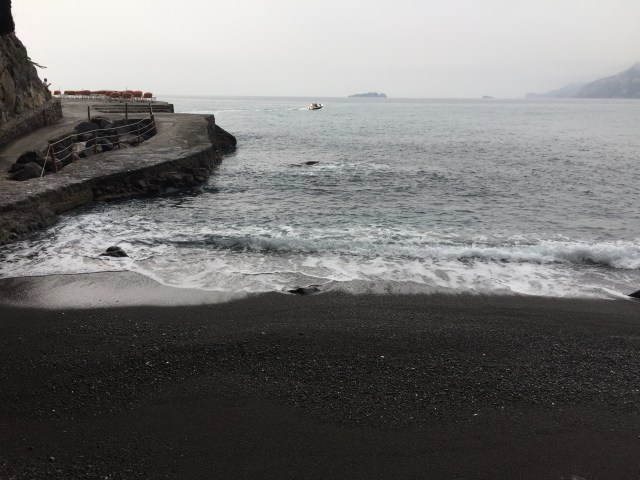
Today the sun is making diamonds on the water. We are on the Amalfi coast in Positano. It is almost heaven here. Mountains, previously of a volcanic nature, plunge directly into the sea from a great, perilous height. There is no fertile plain in between. The beaches are almost black, but the crystal clear water is a deep sapphire blue.

It is in stark contrast to Naples, where we have been since Friday. People denigrate Naples, saying that the city is filthy, noisy, unruly and chaotic: that there is corruption, violence and crime amongst the Neopolitans. All these things are true, but its heart beats furiously; the people are volatile, just like Vesuvius, but they love with great emotion. There is nothing tepid and measured about them.

This was demonstrated from the moment we stepped off the plane and caught a taxi. A taxi driver claimed us, and then another taxi driver took offence that he had jumped the queue. They started shouting and gesticulating at each other; death looked probable. Fury seems to simmer just under the surface of most hearts along with amore.

We spent the weekend touring the city, and eating pizza and pasta. Who can adhere to the no-carbs rule in the birthplace of Hugo’s favourite food: pizza? We headed east from our hotel, opposite the Castel Dell’Ovo. To the east is the Old City and extreme poverty; to the west is where the posh people live, especially up on the hill in Vomera, with its panoramic views of the Bay of Naples.

The main route to the Old City from the castle is the Via Toledo, which is like Oxford Street. But to the north of this main thoroughfare is the Spanish Quarter, which consists of piles of tenements lining steep, narrow cobbled streets; there is laundry hanging from windows or just plonked on the street. The din of vespas is ear shattering, like heavy gun fire, and they come haring around corners, almost bowling you over like ten pins. To my astonishment, one of the fastest riders was a boy of about eight with a two year old strapped to his back. He expertly came to an abrupt holt; she clambered off, wiggled her hips and yelled “Ciao.” They were old beyond their years.

We then headed to the cloisters of Santa Chiara, with its 14th century frescoed walkways along the perimeter, and 18th century painted Majorcan tiles adorning a myriad of pillars (64 in total) and adjacent seats in the garden.

img_5433

I was thrilled to find an Italian greyhound, like Domino, our beloved dog, in a number of the scenes.

It was a peaceful haven after the urban jungle we’d walked through.

img_5432

We then spied a very old church in Gesu Nuovo. The exterior was ugly and plain. Inside, we were agog to find opulence beyond imagination: marble, gold, ornate frescoes adorned every inch of the floor, walls, ceiling and dome.

The next day it was raining. I wanted to go to Vomera, to see the Chelsea of Naples. What would the equivalent of a pheasant or stag look like I wondered? There was a line of taxis waiting around the corner from our hotel with no customers; everyone was at home or at church. The thing about Italians, is that they love to talk. They gesticulate, prod each others’ chests, wave their hands around, stick out their chins to make a point; they move from laughter to an argument with alacrity. The taxi drivers were making the most of dead time; they were communicating the Italian way.

Before we knew it we were bundled into the first taxi. “Where do you want to go?”, the taxi driver asked. I said, “Vomera.” He turned with a look of disgust on his face. “Why would you want to go to Vomera. I was born in Naples. I will take you to better places.” Geoff looked worried. What was the price tag? He read his mind. “Don’t worry Signor. I turn off the meter. You need to trust me.” His English was excellent. So off we whizzed. First stop Vomera. “You see. I tell you. The architecture is the same as down near your hotel. Why you want to come here?” Next stop Castel Sant’Elmo with heavenly views to the eastern mountains, like ocean liners drifting on the plains, flanked by Vesuvius on the bay. “You see that little red balcony there. I was born there,” he explained. “Now I take you to another view towards Capri.” Another spectacle. “You see. I know best.” We agreed.

From the outset, I could tell that the taxi driver was clever; he had nous. His children were professionals. Education had lifted them from the tenements. Every Sunday, the whole extended family got together. Grandparents, parents, children, aunts, uncles, the whole shebang. And they ate from 3-9pm. Antipasta, then pasta, fish, meat and then Sfogliatella, delicate pastries, with sweet ricotta wrapped in crunchy layers. My favourite!

As he dropped us back to the hotel, he kissed my hand and hugged Geoffrey. We had a bella time, and it was not too expensive. We had seen stunning, panoramic views, but we had also been handed a looking glass into the life of a Neopolitan man.