Day 40

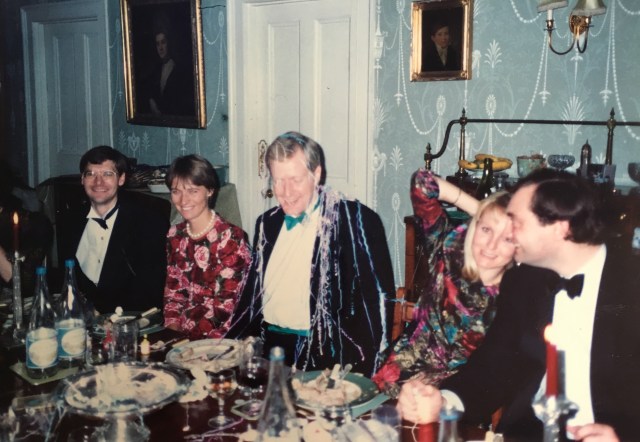
Yesterday we hit the surf at Austinmer. It was heavenly, catching waves, diving under the white wash, tasting the salt. I always feel youthful in surf. Like the young girl at the Weekender, up near Gosford, where Stan’s parents had a holiday home by the sea. I forget I’m in my mid-fifties.

I didn’t grow up with direct access to the sea. The St George region wasn’t far though, but during the weekdays we were landlocked. Swimming was in chlorinated pools in Bexley North or Kingsgrove, the next suburb, either in backyards or at the Olympic pool on Preddys Road, where the Collins family lived.

Our street Laycock Street (named after Hannah Laycock , the first settler of the area, who was granted King’s Grove Farm – in 1804) was a typical neighbourhood. The area once had teeming wildlife: kangaroos, wallabies, koalas and possums jumping around the bushland and platypuses swimming in Wolli Creek. That was all long gone and replaced with a grid of monotonous red brick dwellings, with a garage, a driveway and a backyard (garden) and a small front yard. Beyond the front fence, there was more grass, which you were responsible for mowing, even though it was government owned. Over the years, some families put on extensions or clapboard second stories, called cape cods. Some had in-ground pools or the cheaper above ground ones, with blue plastic liners. We had an above ground one. It was behind the garage, next to the mulberry tree.

And then there were our neighbours… Mr Tierney was pretty deaf from the First World War in Turkey. He loved my dog Skipper and gave him a roast on Sunday. Mrs Smith was elderly too and used to wave at all the kids who tore past her front fence like tornadoes. Jenny, down the street towards the park (common) was my age, but she didn’t play outside much. She pulled a kettle over herself when she was a toddler and had horrific burns. Her parents were overprotective. The Catholic family across the road – the Kregans. There was a big divide between Catholics and Protestants in those days, as if we didn’t share the same Christ. Mr Kregan used to yell his head off at his wife on Sunday mornings. Dad used to mow the lawn to drown out the din. The Greek family across the road, who grew wild passion fruit along their fence and gave you sugar coated almonds when you visited. Their home was well ordered and civilised.

IMG_3927

The Creek House from where I will be writing

But the family we moved in and out of, without boundaries, was the Crundwells, right next door. The four kids were adopted. Christine was my age. She was a beautiful Polynesian. She was born with two digits on her upper thumb, one being removed at birth, leaving her thumb looking like a boomerang. Stephen was my brother’s, Shaun’s, age and had a cluster of moles on one cheek, which was a medical mystery periodically studied at the Children’s Hospital (equivalent to Guys in London). We didn’t give these traits a moment’s thought. They were our best mates and we ran around with them in a pack.

Mr Crundwell was a civil servant and loved classical music. He never went to the pub like the “working” men, like Stan. Mrs Crundwell was a teacher. They drove a Combi van. They were Methodists. We abbreviated their names to Mr and Mrs C – an Aussie trait –a typical way of addressing the parents of your mates.

Mrs C’s problem was that she had a really blazing temper –she was a hollerer. You instantly knew when you turned up at the back door unannounced whether to tread warily or not. If she was on a rant, the family would normally suffer in silence, but occasionally, Mr Crundwell would have a gut full and put his foot down. Then he would bark back out orders to clean the house up. The house was always a bit of a tip. Sometimes he’d even say, “bloody”, despite being a Methodist. Then you knew he was really fuming. Then Mrs C would become as meek as a lamb. She’s clear up and Mr C would retire to play The Nutcracker on his record player. 

Mr and Mrs C let me use their Encyclopaedia Britannica whenever I wanted, which was a lot, as I was good at school. When I was 10 I took an IQ test with the rest of my class and I was asked to attend an Opportunity C school in Hurstville, for academically gifted children. It was the same one that Clive James attended decades before, but Bev took advice and thought I was better off staying at Kingsgrove Primary.

Today, we will go for a surf again and then catch up with the relos for the afternoon. It’s Mum’s birthday on Saturday so we’ll all be together for a change, except for Anna and Hugo, who I miss.
Day 39

The plane trip yesterday from Singapore to Sydney was substandard. The in-house entertainment broke, the food was horrible and I was not a happy Sheila. You usually do better Singapore Airlines!

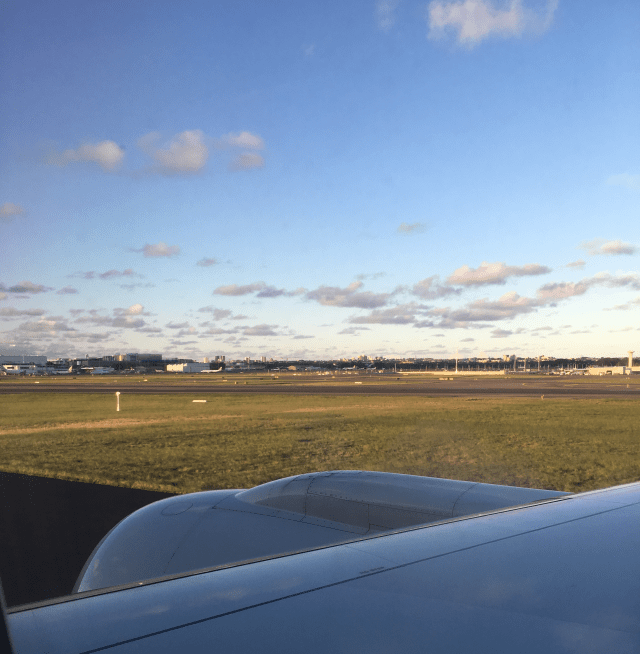
We arrived in Sydney late afternoon at sunset. As the plane was preparing for touch down, I could see Sydney below me in the sunshine. The harbour was filled with sail boats of all sizes and shapes – flanked by the sail-like Opera House and the Harbour Bridge – sturdy, strong and true. I was tired, swollen and pale. But excited to be back.

It was my turn in the queue to approach the immigration officer.  He welcomed me with a big grin and as he stamped my passport he said, “You have a beaut stay love.” Things were looking up.

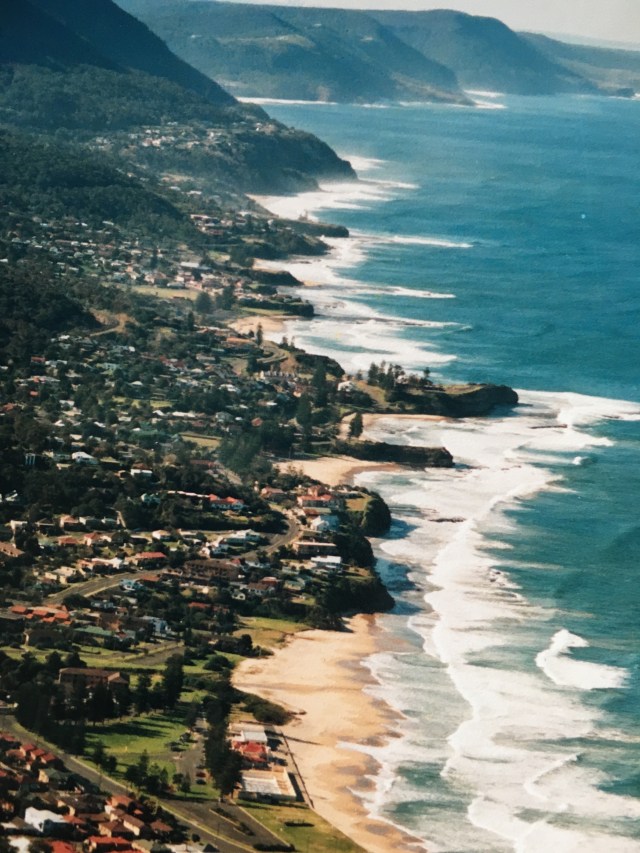
My sister in law, Wendy, was there to load us up and drive us an hour south of Sydney to where the Potts clan live, now minus Stan the Man. Dad was always the one to collect us from the airport and I miss him. The Potts family live on the Illawarra peninsula, which spans from Stanwell Park to Bulli, just beyond the Royal National Park. The whole of the Pacific side of Oz is littered with jewels of beaches. But the Illawarra peninsula is particularly spectacular as you have the escarpment on one side and the sea on the other, so that there is only a smattering of houses between. Only so much development can happen, as you are blocked from building west.

FullSizeRender

The Illawarra peninsula

So from the airport you pass through the St George region where I grew up in the suburbs, over the George’s River, through the Southern Shire, then you leave the ugly 1960s/70s architecture behind and hit the bush land of the Royal National Park. Finally you turn left towards the sea and at Stanwell Tops you descend dramatically from the top of the escarpment to start the winding drive down the coast to Coledale, midway on the strip.

Shaun and Wendy, my brother and his wife, were visionary and bought land in their early 20s, shortly after they were married, when it was cheap and the area was filled with miners’ cottages. Their mates, Brett and Gillian Davis, shared the plot and together they built two double storey, clapboard houses, with a communal garden, leading to a creek and a boomerang’s throw to the beach. My parents, Stan and Bev, upped sticks and joined them in 1999 and moved a few streets further south.

After a very long journey from London we were finally reunited with everyone. It had been raining and the smell of the eucalyptus was in the damp air.

My children have enjoyed many interludes from urban life in London in this idyllic spot, running wild with their Aussie cousins and the Davis’ children, first in the backyard and then further afield. Startrite shoes and smart clothes gave way to swimmers and bare feet.

The middle cousin Jonah was missing when we arrived. He’d gone in search of a deserted shack up the coast with a mate. They were going to move in for the night, catch fish and grill them on a campfire.

That is the Aussie childhood for you, on the outskirts of ‘development’.  Adventure in spade loads, the sort of stuff Bear Grylls is famous for. That is the sort of freedom that I had growing up in Bexley North and I’ll tell you about that while I’m in Oz. 

Today we will hit the surf and have some good Aussie tucker – grub – food and catch up with the relos.

Day 38

It is 5.30am in the morning. I am typing at Changi Airport in Singapore, about to board the next plane to Sydney, where I was born and grew up in a suburb called Bexley North, not far from where Captain Cook landed his ship ‘The Endeavour’ in Botany Bay, Australia, in 1788. That is ironically where the airport is located on the north of the bay.

Bexley North is in the St George region, made up of the cities of Kogarah (where a famous Aussie, Clive James, who also ended up in England, was raised 20 years before me), Hurstville and Rockdale. Further past this region is the final bit of Sydney to the south, the Shire, not Lord of the Rings, but home to Cronulla beach. This is where my brother Shaun learnt to surf.

I can feel my throat tightening as I type. It’s always an emotional trip, this next leg of the journey. I am not really returning home. I don’t live there anymore. I am just visiting. I will have to leave. And yet it is pivotal to my identity – who I am in the guts of me.

Yesterday we had a ‘Singapore Sling’ (cocktail) and sandwich at the Long Bar at the Raffles hotel. You can shell peanuts and chuck the shells on the floor. Little birds fly in and out, feeding on the crumbs. This tradition has been in place for a long time.

The hotel is an old colonial beauty, the matriarch of Singapore. She has watched the city shake off its colonial roots – Asian progress –without herself changing. She is like an elaborate wedding cake with red icing on top. If you don’t see anything else in Singapore, it is worth paying this great lady a visit.

I’ve been home to Sydney many, many times since the birth of my children, Anna and Hugo in 1994 and 1995 respectively.  I wanted them to see my side of the story – show them the greatness of this unique island, which is also classed as a continent.

But before Anna was born I only went home once, once in five years or so. I went walkabout in England and got lost. I forgot my roots. The Kangaroo was trying to camouflage herself as a pheasant.  But the didgeridoo was calling me back to my senses – somewhere there was a corroboree dreaming me home.

So when Anna was a baby we took her back to Oz to show her off to the relos (relatives).

After 18 exhausting hours on the plane, I caught sight of the Australian coastline ahead in the distance from my window seat. It caught me by surprise, knocked me off balance. I could see the surging waves relentlessly pounding the uninhabited section of virgin coast, just west of Darwin, at the top of Australia. There was no sign of civilisation for miles.

Touchdown at Sydney Airport

Touching down in Sydney airport

As we left the coastline behind and it sunk in that we were in Australia (albeit above it) something broke in me, a tension snapped and I was overwhelmed with nostalgia and loss. I started to cry and I couldn’t stop. We passed over miles and miles of red desert, my sunburnt country, before finally reaching the fertile band hugging Sydney in the east.

As Bill Bryson observed in his book ‘Down Under’ “Australia is, after all, mostly empty and a long way away.” It’s population nudges 23 million. Not much given its area is 2.97 million square miles. China is 3.7 million square miles. China has a population of 1,357 million. You can do the math. Lots more people inhabiting China.

Geoff patiently held Anna and let me get on with it – get the sadness out of my system – from setting foot ‘over’ Australia to touch down.  The staff on the plane looked concerned that there was a nutter on board. I wasn’t insane. It was just that the Kangaroo was coming back. She hadn’t disappeared forever. She’d just disappeared under a wave, holding her breath.

So today I will be up in a tin can in the sky, once again, with Geoff. It takes a day out of your life to reach Sydney from London. It’s worth it as I “Come from the land Down Under, where women glow and men plunder, Can’t you hear, can’t you hear the thunder…” (Men at Work song). I can hear the thunder. It is the great country of Australia calling me and we’ll be there soon.

Day 37

We had dramatic thunderstorms yesterday and more are due today. In between it will be either cloudy and around 30 Celsius or sunny and around 30 Celsius. The temperature is constant, no matter how changeable the weather.

We spent yesterday at the Tanglin Club, which we are allowed to visit on a reciprocal basis due to our Hurlingham Club membership. You scratch my back, I’ll scratch yours – you get to visit other clubs around the world as long as they can visit yours. We’ve done so in Sydney, Bermuda, Paris and Hong Kong. It is an opportunity to observe the locals at play.

Geoff learnt to swim at the Tanglin Club when he was 2 years old in 1955 (yes that makes him 63). Tony and Eve, his parents, relocated to Singapore from Accra, Ghana, where Geoff was born and spent three years here. Tony was Regional Secretary of the Commonwealth Development Corp. (which was like a British government backed investment bank). He was part of the colonial age. His older brother, Tim, and his younger sister, Rachel, were also with them. The older two, twins Jonathan and Miriam, had been sent to boarding school in Britain. The younger bookend twins, David and Patrick, were yet to be born. They were born in Lagos, Nigeria. It is a family setup that I could never contemplate, given that as a child, I was never more than 10 miles from my parents.

daddy swimming

Geoffrey in 1955

The Tanglin Club in the 1950s was a British expat haven. Its formal dining room is still called The Churchill. Geoff can remember floating to the bottom of the pool and seeing Eve coming down to the depths to retrieve him. He is not sure to this day whether he was actually drowning. Eve obviously thought so! It is striking, over the period we have been coming to Singapore since the early 1990s, how diverse the membership of the club has become: Chinese, Indian, American, Australian, Kiwis, but still a few Brits. The Chinese take tea inside in the cool. The Brits sit outside sweating like pigs in the sun. What is the saying, “Mad dogs and Englishmen stay out in the midday sun…”

IMG_0159

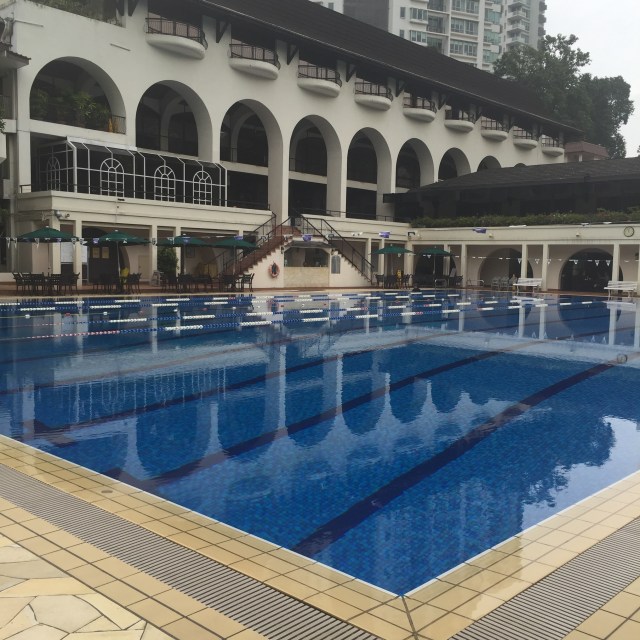
The Tanglin Club pool where Geoff learned to swim in 1955

The Japanese occupied Singapore during WW2. After the war, it reverted to British colonial control, with increasing levels of self-government being granted. It became an independent republic in August 1965; 7 years after the Wilmots had left by ship (through the Suez Canal) back to Kent in England, before onward travel to Lagos.

Singapore is an unadulterated success story in economic terms. When the British handed over the reins it had a lot of social problems, but it has gone from strength to strength, growing 9% a year according to one source. Every time we’ve visited, something new has appeared on the landscape, more land has been reclaimed from the sea, another monster skyscraper is up, a grand prix track has appeared where there was water, a casino, a nighttime safari, another  ‘London Eye’. The shopping is on a stratospheric level. What you see above street level is the tip of the iceberg. There are floors upon floors underground of cool, air conditioned retail outlets.

Is it charming? In a word, NO. Most of the colonial buildings have gone. Some have been turned into hotels like the Fullerton, Goodwood Park Hotel and Fort Channing, but the tigers that once roamed the city and the monkeys that swung from trees when the Wilmots were here are long gone. As are the smell of spices on the hot breeze. Sentosa Island is like a pretend film set. The sand has been imported and the infrastructure looks rather synthetic, like a toy city.

Nevertheless, as a stopover, it is unbeatable for comfort and efficiency. Within an hour of the wheels touching the tarmac at Changi Airport, you are in the swimming pool of a very nice hotel.

Today we will go to Raffles, the grandest old hotel of them all.

Day 36

The weather today is hot and humid. I am in Singapore, with Geoff, on my way to Australia. The first time together, without Anna and Hugo.

We have travelled to the Equator in a ‘tin can’ in the sky. Have you had the dream where you can fly like an eagle? When Geoff dreams, he is like an Avatar – he can just effortlessly launch off a stable platform and glide, adjusting his path with a subtle change in body direction. No such luck for me! I have to flap and flap like a helicopter until enough energy is generated for lift off.

It is extraordinary that humans (or ones that can afford it) can fly around the world today. And that is a point in itself. In the 1950s and 1960s, plane travel was reserved for the jet set, super rich. It took a number of days with multiple stopovers to reach the Orient from London. Now, if you have tons of cash, you probably will turn left to first class. Otherwise, you turn right, passing through rows of, often empty, business class seats, until you finally make it to economy. That is where we always head. Business class tickets for all four of us on a regular basis over the years would have amounted to the equivalent of the cost of a house.

The first couple of times we flew to Oz, with tiny children, we flew all the way through, with an hour stopover somewhere. The equivalent to hell on earth. In those days, there were screens that would lower down from the ceiling and play one film for all. The children were too small to see the screen. We switched to Singapore Airlines, as they were one of the first to install screens in the back of the seat in front. On yesterday’s flight, we had touch screens, giving us a choice of hundreds of films and television shows. No need for handset controls. Such progress over such a short period!

Geoff and I flew the children to Sydney via Singapore on one of the earliest Airbus A380 flights. When we saw the gigantic aircraft I froze with fear. I just couldn’t believe that it was capable of becoming airborne; it was on a massive scale. As it happened, all the technology went AWOL and there were technicians running around like headless chickens trying to get the inflight entertainment to work.

Although flying conditions have improved over the years in terms of the quality of the food and entertainment, the routine is still the same. Your seat area is initially spotless. You store the things you will need during the flight in the pouch in front of you: books, reading glasses, antiseptic hand wash (nappies and wipes when the children were little). Then you check out the films you will watch. Maybe mark them with an asterisk. Then you study the menu as if you were in a Michelin star restaurant and resolve not to eat all the extras like ice creams and cheese and biscuits and to drink minimal alcohol.

Fast forward to the end of the flight. You are distressed at the pale and bloated face staring back at you from the filthy toilet mirror. You have eaten everything on offer, the full monty. You just resisted licking the little rectangular plastic plate after your main course. You consumed alcohol, not just water. You are so sleep deprived by the end that you are almost insane. When you leave the plane your area looks like WW3.

And then balmy, exotic Singapore. What a relief to get off the plane. Feel human again. See the exotic frangipani and bougainvillea lining the motorway. I have stopped off in Singapore 27 times since I married Geoff. Our first trip Down Under was via Bangkok, Thailand: noisy (an overload of traffic on the river and roads) and smelly (of humans, spices, food and sewerage). The locals tried to sell you anything they could: a suit or dress in twenty-four hours; gems (we bought a Ceylonese sapphire for a song); exotic fabrics and pearls. I had never seen humans with missing limbs, begging on the side of the street in rags or women enticing men to come and join them ‘inside’ for a sexual transaction. It was out of my comfort zone – off the radar.

IMG_3853

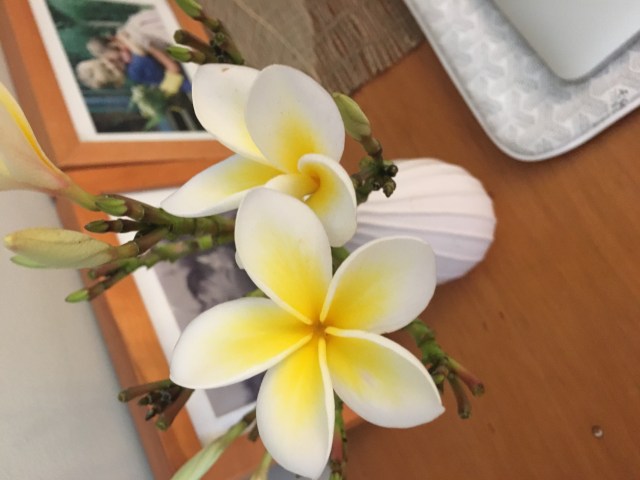
Frangipani trees in Singapore and Australia

Singapore was a different story. It is where Geoff learnt to swim 60 years ago at the Tanglin Club and Orchard Road was actually full of orchards: of nutmeg, pepper and fruit plantations, not a shopping mecca. It is where I marked my children’s growth from baby to adulthood, like marking their heights on a doorway.

Today, we will swim and try to feel human now that day is now night and vice versa.

Day 35

Anna’s pain has subsided and she has colour back in her cheeks.

Yesterday I talked about Sloane dinner parties and the art of entertaining. Some of the best dinner parties I attended in the 90s were at Waterperry: the pink, East Sussex home of the Corrie Seniors, Hugh and Janet. Sadly now no longer with us.

Louise Prince married Richard Corrie not long after us. They were married at the Royal Naval College, Greenwich, in the East of London, as Louise’s father had been a naval officer. The reception was held in the Painted Hall, designed by Sir Christopher Wren (think St Paul’s Cathedral), which is described as the “Sistine Chapel (think Vatican) of the UK”. It is the grandest setting for a wedding that I have ever attended. The interiors are of immense beauty and scope – breath-taking.

The Corrie clan were almost late to the wedding. They could be heard entering the chapel due to their unique laugh, loud and raucous, with which they egg each other on, so that it reaches a crescendo. I would recognise that laugh anywhere in the world. 

The Corrie clan is larger than life. Janet, the matriach, was a Macleod of the Isle of Skye (West Coast of Scotland) clan. So Richard wore a kilt to the wedding. Hugh was the libel lawyer for the Mirror Group. When he died in 2006 the Press Gazette read, “Corrie adored journalists. He loved and shared their mischief and penchant for trouble making.” That summed him up perfectly.

Richard rowed for Eton (winning the Princess Elizabeth Challenge Cup in 1979) and England in the Under 18s. He is a member of the exclusive Stewards’ Enclosure (like the Royal Enclosure at Ascot) at the Henley Royal Regatta, Henley-on-Thames, over the first weekend in July. Self-electing Stewards annually run the Henley Royal Regatta and have a little section all to themselves and their guests. The event is all Pimms and strawberries and the best of the English summer season. A woman’s dress must be below the knee or she will be refused entry to the Stewards’ Enclosure. This is the one event where men outdo the women in the flamboyance stakes. The ex- rowing men wear colourful striped jackets and caps and look like humbug sweets.

FullSizeRender-6

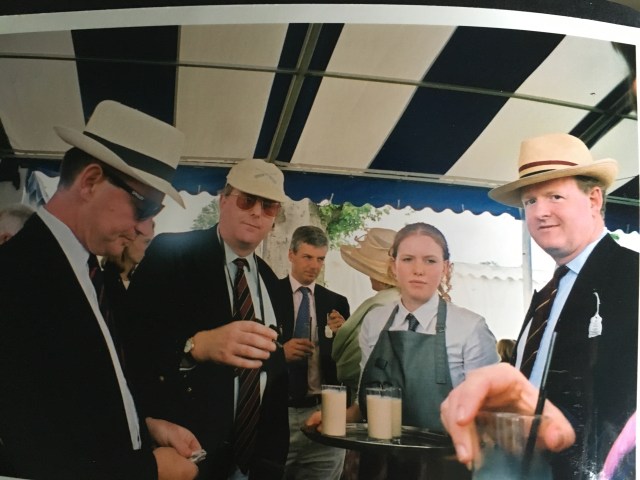
Richard and Roderick Corrie at Henley

I first met the Corrie clan en masse at the Regatta in July 1990. Meeting them was like facing a hurricane; you had to keep your wits about you. Louise introduced me to Hugh, explaining that I had married Geoff the previous year. Hugh said, “Do I detect an accent?” I told him I was an Aussie. Hugh, chuckling, said, “So I suppose you married Geoff for the Green Card (immigration rights) eh?” Everyone stopped in their tracks, holding their breath, to hear my response. I replied, “Well done. You know you’re the first person to guess the real reason for me marrying him, that and his money.” I had passed the Corrie test. You must have a sense of humour or you’re persona non grata.

FullSizeRender-7

Picnic before the races by the cars

I went to many dinner parties at Waterperry. Or picnics in the garden, with tennis and swimming. Richard’s 30th was a formal affair. Black tie for men. Women in silky, glossy outfits. After main course, Janet announced to the table that her prize boar, Oily Poily, was due to become a father. One of the sows was giving birth to piglets. So we all went out with torches to inspect the new additions to the clan. I shall never forget Janet standing there in Wellies, with her dress hitched up and her pearls dangling, to inspect that all had gone well.  Like P.G. Wodehouse’s Lord Emsworth and his prize porker, the Empress of Blandings.

“My Family and Other Animals” by Gerald Durrell (his brother Lawrence was also a famous author) has recently been made into another TV adaptation (starring a friend’s sister, Daisy Waterstone). The Corries are like the Durrells – funny, intelligent, bookish, quirky. It has been magical and entertaining to be part of their lives for many years.

Today I am packing to go to Australia, via Singapore, with Geoff. So I shall be reporting from there.

Day 34

Weather still terrible. Cold.

Yesterday daughter, Anna, had her wisdom teeth removed under a general anaesthetic. She came out with packs in her mouth. The nurses who wheeled her back to her room told us that she was the first person to talk nonstop with packs in their mouth and still make sense. That’s Anna. She was so funny when she was still groggy – insisting that she needed to text her friends and watch TV, even though she was incapable of doing both.

The doctor said she would be on soft food for a bit.

I recently talked about our trip to Paris, in February 1990, when I had insomnia. Exceptional food is now served in many a top London restaurant now days. That wasn’t the case when I first moved to London. Paris, however, had exceptional food back then. The pastries were delectable. I had never eaten croissants and pain chocolate. Heavenly!  And the sauces on the meat … had never had Béarnaise sauce on the meat cooked by Stan the Man, my Dad, on the barbie.

It was a trial learning to cook in London in the first days of married life. The ingredients didn’t seem to translate to my Aussie Sheila brain. It was a learning curve. I had to learn to cook three course meals for dinner parties. Kitchen supper parties were different. They were cosy, relaxed affairs. For dinner parties you need to set the table in the correct fashion, the right order of cutlery and glasses.

IMG_3591

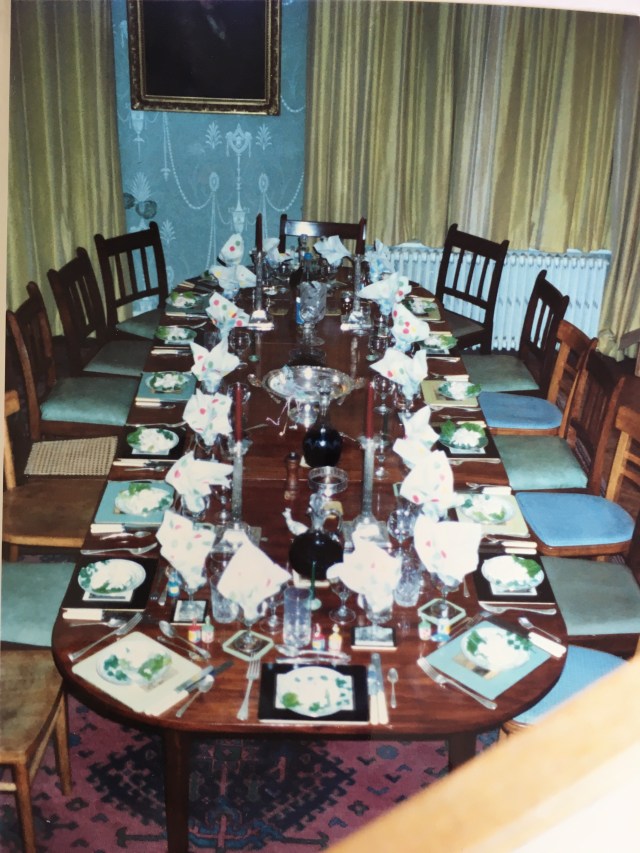
Ready to sit down for dinner

Ghislaine, one of the three titled Honourables in my life, was a whizz kid at throwing dinner parties in her London home, before she and Peter moved to an ancestral home in Scotland. She had her father’s enormous dining table, which he had used as his desk whilst serving as a Member of Parliament.  Dinner parties were late. You were asked for 8.30 for 9pm, meaning that you must arrive no later than 8.50pm. Then drinks in the drawing room. Dinner was usually at around 9.30pm, and as I said, three courses: a starter, main and pudding (what Sloanes call desert, even if it isn’t a fruity cake). 

I had to adapt to this new way of eating. Aussies usually eat no later than 7pm. You’re done and dusted by 10pm. Also Aussies serve cheese and fruit before dinner, with drinks.

Having said all that, formal dining, was fun. It was not just eating a meal that took a lot of trouble to cook: it was the art of conversation; banter; talking to the opposite sex whilst hopefully looking your best in all your finery and relaxing.

FullSizeRender-5

Dinner is getting festive

The formal dinner party has somewhat declined over the years, but for some, it is still a fixture in the calendar. Eating out has become more popular?

Today I will try and make sure that Anna swallows the right pills so that she is comfortable.

Day 33

I’m sick of reporting on the weather. Spring is not quite kicking in! I’m fed up.

Yesterday I went to have my hair done at Richard Ward in the Duke of York Square, near Sloane Square, Chelsea. I told you in a previous blog that I had a disastrous makeover for the Daily Express, with Caroline Stanbury, when we first moved to Chelsea. But I met super talented Nando, the handsome, Portuguese hairdresser from Richard Ward, who cut my hair into a super new look. I went to have my hair cut by him thereafter. 

Nando is the quiet type, except with the staff. With clients, he just gets down to business. He has an A-class client list. When I first started going to see him, I couldn’t believe how quiet he was. “Hello, Sandra,” was the most I’d get and then, cut, blow dry, and out of the chair to part with the cash. Well I wasn’t having that. I started to cackle away … about this, that and anything. Eventually, he started to chat. We became hairdresser-client friends. I brought Ugg boots back from Australia for him. When I said he was getting too expensive, he said, “Don’t worry, I’ll charge you less.”  I refused and found a less senior stylist, Sabrina. He always pats my shoulder though and says hello.

Sabrina is glossy ebony, with pearl white teeth. She’s beautiful. Like me she has endured a makeover: with Trinny and Susannah, celebs in the 90s, who did television makeovers and brought out books about how to pick the right clothes for your body shape.

Sabrina was part of Kate Middleton’s big day, marrying Will, in Westminster Cathedral. She styled the bridesmaids’ hair at the Goring Hotel. She was sworn to confidentiality, of course, which she has honoured. But she did say to me, “It was the most extraordinary experience you could hope for as a hairdresser.” She once styled Kate for a charity event. She told me, “If someone had said to her as a little girl, ‘One day you are going to do the future Queen of England’s hair,’ I wouldn’t have believed them.”

The buzz in the salon around the time of the Cambridges’ wedding was high octane. The press were camped outside for a scoop. What a coup for the salon and for Richard Ward himself.

Richard is also a member of the Hurlingham Club. When I see him my hair is usually in a ponytail after tennis. He is always very friendly and chatty.

When I turned 50, great Aussie mates, Gill and Brett Davis, came to stay with us in London. We did all my favourite “London” things that day. Tennis at Hurlingham (they borrowed the requisite whites from Geoff and me), lunch in Sloane Square at Manicomio next to Richard Ward, the Victoria and Albert Museum in South Kensington, a tour of the Royal Hospital where non-commissioned soldiers (ie non officers) can live in retirement, and dinner back at the Hurlingham.

FullSizeRender-1

My 50th birthday with Aussie freind, Gill Davis, at Hurlingham

After we’d played tennis I saw Richard Ward and ran up to him. “Please meet my friends from Australia. It’s my 50th and they would love to meet Kate’s hairdresser.” He was more than happy to meet them. What a good bloke.

Today Anna is having her wisdom teeth taken out under general anesthetic. I am nervous.

Day 32

Still a bit damp and grey this morning.

I watched the Olivier Awards last night and I have to confess, I have had my own Notting Hill moment. Where you don’t recognise the person you are talking to is someone famous. 

Several years ago, great friends of ours asked Geoff and me, very last minute, if we could come with them to the Olivier Awards ceremony and after party. They were taking a group of the hubby’s clients to it and a pair had dropped out at the last minute. We were seat fillers.

Off we went on a Sunday night to the Royal Opera House in Covent Garden. I had bought a floor length velvet dress and Geoff wore black tie. We were all meeting for champagne beforehand. Geoff and I were early so we popped into Starbucks for a coffee, near Trafalgar Square. A homeless man came and sat next to us. We bought him a coffee. The contrast between our attire and his was crazy. Then Geoff spilt the coffee down his shirt. There was a panic to get it clean in the toilet. Thank goodness we did.

FullSizeRender

Before the Olivier Awards

After nibbles and champagne we were chauffeured to the awards. As we walked up the red carpet, I could see some of the cast from Downton up ahead. It was thrilling.

We made our way to a private box. I was introduced to “Anita”. She was very friendly.

I asked her what she did and she said, “A little bit of acting.”

I responded, “Oh how funny. So does my daughter Anna.”

I went on and on and on about how Anna had landed her first audition and appeared on Family Affairs on Channel 5. The show was axed after 3 months, but her mother in the show was Glynis Barber of Dempsey and Makepeace, the 80s cop show.

She said, “Good for your daughter.”

I asked, “Have you got any work coming up shortly?”

“Yes, I’m doing a play in Bromley next month on the relationship between Bette Davis and Joan Crawford. I’m playing Bette,” she replied.

Then we all took her our seats. There was a spare one beside me, with Anita on the other side.

The opening act was Brian May of Queen fame performing a number from the West End show, “We Will Rock You”.

About 10 minutes after the number ended, the box door opened and Brian came and sat down beside me. He ignored me and kissed Anita, HIS WIFE.

It turned out that his wife was Anita Dobson. She had been a star on Eastenders. We hit it off at the after party and she invited the female guests to come and see the show in Bromley. So off I went. I was a huge fan of Greta Scacchi (part Aussie) and she was playing Joan. I managed to get into her dressing room and we had a chat and some photos taken. Who can forget her simmering in “White Mischief”?

Today I am up to London.

Day 31

Today is raining after a glorious weekend.  Killed ourselves mowing, weeding and feeding the garden.

On Friday, a tennis friend, from the Hurlingham Club, came and gave her expert advice on how to grow cutting flowers and veggies. A project for the summer.

Nicky also came for tea and we had a power talk, that means talking about everything very economically and effectively. I value her insightful and clever mind. I just had a message from her that she was up half the night in driving rain, delivering lambs. That’s my Nicky.

When I went to Iventure, Auntie Wilma’s farm, in the grasslands near West Wyalong, I would help with the shearing. At the same time male lambs were castrated and all were docked, tails removed. 

There is something tremendously romantic about the life of itinerant shearers and workers. Moving from station to station, doing their back breaking work, keeping their spirits up with larking around and singing. “Clip go the shears boys, clip, clip clip…” as the song goes.

In preparation for their visit, Auntie Wilma and I would make hundreds of Anzac biscuits for “Smoko”, which was morning tea, with a cigarette (the smoke), for the shearers.

The shearing began at the crack of dawn. The speed and energy of the shearers was awe inspiring. Each sheep would be wrestled over, the hind legs then trapped between the shearer’s legs and the front legs under his left underarm (if he was right handed) and then whilst the sheep was immobilised, he would use the electric shears to remove the fleece in one piece. If he accidentally nicked them, hot tar was applied to stem the blood flow. Then the sheep would be thrown down the chute and the next one would appear from another chute. Over and over all day.

IMG_3432

Uncle Tod, owner of Iventure before his daughter Wilma took over

It was my job to sweep the floor, the dags – soiled wool – from the sheep’s bottom, between each turn. The shearers teased me. They would burn my backside when I bent over to sweep with their hot shears. They would throw me into the wool bales. It felt greasy like Vaseline in there. It was joyous, fun times.

Underneath the shearing floor were the little lambs, separated from their mothers, crying like mad. They were inconsolable. I would try to comfort them, but to no avail. Wilma and Don would place rubber bands around the base of their tails so that they would fall off – docking. Otherwise they would get flyblown and maggots would grow there. The male lambs, if not intended for breeding, were castrated, again by placing rubber bands around their balls. Rumour had it that Wilma’s father Tod, would castrate them by cutting open the balls and removing them with his mouth. 

Today I intend to have a break from the garden and go with Domino to the South Downs for a stretch.

Going to watch the Olivier Awards on television tonight.